That flat, dragged-out feeling at 3 p.m. is not always about sleep or motivation. Sometimes it is simple hydration. If you are weighing electrolyte powder vs tablets, the better option usually comes down to how you train, how you work, and how likely you are to actually use it every day.
For most active adults, this is less about finding a perfect format and more about building a routine that fits real life. A great hydration product does not help much if it sits in a gym bag, tastes bad, or feels annoying to prep when your schedule is already full. The right choice is the one that keeps you consistent.
Electrolyte powder vs tablets at a glance
Both powders and tablets are designed to help replace key electrolytes like sodium, potassium, and magnesium. Those minerals matter for fluid balance, muscle function, and staying mentally sharp when you are sweating, training hard, traveling, or just running through a busy day.
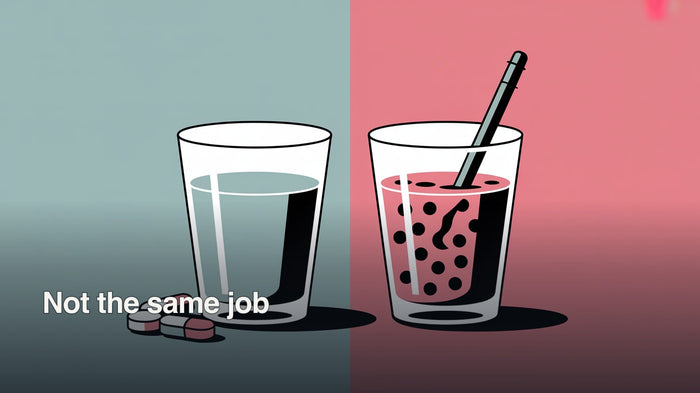
The big difference is delivery. Powder is meant to be mixed into water and usually gives you a full drink that encourages you to hydrate at the same time. Tablets come in a few forms. Some are swallowable capsules or pressed tablets. Others are fizzy tabs that dissolve in water. When people compare electrolyte powder vs tablets, they are usually thinking about powder versus swallowable tablets, and that is where the trade-offs become clearer.
Why powder often works better for daily hydration
If your main goal is steady, usable hydration, powder usually has the edge. It turns hydration into a more complete habit because you are not just taking minerals. You are also drinking a meaningful amount of water with them.
That sounds obvious, but it matters. Many people take a tablet and assume the job is done, while still falling short on total fluid intake. Powder naturally solves part of that problem by making you mix it into a bottle or shaker. If your day includes workouts, meetings, errands, and long stretches at a desk, that simple behavior cue can make a real difference.
Powders also tend to offer more flexibility in formula design. Brands can include a broader range of electrolytes, trace minerals, and add-ons like B-vitamins without making the serving physically hard to swallow. That can be useful if you want more than a bare-minimum hydration product. If your routine is built around calmer energy, clearer afternoons, and zero sugar, a powder format often gives you more room to get those benefits in one scoop.
Taste is another practical advantage. A well-made powder can make plain water easier to drink, especially for people who know they should hydrate more but do not enjoy forcing down bottle after bottle of plain water. That is not a small thing. Better taste often means better compliance, and better compliance usually beats a theoretically perfect formula you never use.
Where tablets make sense
Tablets win on portability and speed. You can throw a small tube or blister pack into a backpack, carry-on, or desk drawer and not think about it again. If you travel often, move between work and the gym, or want a backup option for long days out, tablets are convenient.
Swallowable tablets also appeal to people who do not care about flavored drinks and just want a quick, no-fuss option. If you already drink plenty of water on your own and only want a simple electrolyte add-on, that can work.
There is also less mess. No scoop, no powder residue, no chance of spilling a serving in the car or at your desk. For some people, that convenience is what keeps them consistent.
The catch is that convenience can come with compromises. Because swallowable tablets have limited space, formulas may be lighter on actual electrolyte amounts or narrower in ingredient range. Some are more like a token hydration product than a meaningful one. That does not make them bad. It just means you need to read the label instead of assuming all formats deliver the same support.
Hydration speed and effectiveness
A common question is whether powder works faster than tablets. The honest answer is: sometimes, but not always by a dramatic margin.
When powder is mixed into water, you are taking in fluids and electrolytes together right away. That is a practical advantage, especially after sweating or during a long workout. Your body does not need you to be fancy here. It needs fluid and enough key minerals, particularly sodium, to help retain and use that fluid well.
Swallowable tablets have to break down in the digestive system before their contents are absorbed. In most everyday situations, that difference may not be huge. But if you are already dehydrated, cramping, or trying to recover quickly after heavy sweat loss, powder tends to be the more efficient choice.
Effervescent tablets are a middle ground because they dissolve in water. In that case, the comparison gets closer. Then it becomes more about formula strength, sodium content, taste, and price per serving than format alone.
The ingredient label matters more than the format
This is the part many shoppers skip. Electrolyte powder vs tablets is a useful comparison, but the label matters more than the shape.
Start with sodium. It is often the most important electrolyte for active people because it is the primary mineral lost in sweat. If a product barely contains any sodium, it may not do much for serious hydration no matter how good the marketing sounds.
Then look at potassium and magnesium. These can support muscle and nerve function, but they should complement sodium, not distract from it. A formula that highlights trendy extras while underdosing core electrolytes is missing the point.
Next, check sugar and stimulants. Some hydration products pile on sugar, caffeine, or ingredients better suited to a pre-workout. That may be fine in specific cases, but it is not ideal if you want hydration that supports steadier energy and a calmer baseline through the day. For many people, especially those trying to avoid energy spikes and stress-driven crashes, a zero-sugar, stimulant-free formula fits better.
This is where a product like Hydromend reflects a more useful approach: hydration designed for daily life, not just max-effort training sessions. That can be the best starting point if your goal is to feel more even, clear-headed, and consistent rather than amped up.
Cost, taste, and routine fit
Powder is often more cost-effective per serving, especially in tubs or larger pouches. Tablets can look cheaper upfront, but the cost per meaningful dose may be higher, particularly if the formula is light and you end up needing multiple servings.
Taste is personal, but it drives behavior. If a powder tastes clean and easy to drink, it can help you drink more water overall. If a tablet leaves a mineral aftertaste or feels chalky going down, you may start skipping it. The best hydration routine is the one you will repeat on ordinary Tuesdays, not just after your hardest workout of the month.
Routine fit is the real decider. If you like a daily morning bottle, powder makes sense. If you need something ultra-portable for flights, races, or backup use, tablets are useful. Many people actually do best with both: powder as the main habit, tablets as the emergency option.
Who should choose powder
Powder is usually the better fit if you want hydration support that feels built into your day. It works well for people who train regularly, sweat a lot, want zero sugar, or prefer one simple step that combines fluids and electrolytes. It is also a better choice if taste helps you stay on track or if you want a formula with added functional support like minerals and B-vitamins.
If your afternoons tend to feel flat, your workouts leave you drained, or plain water never seems to be enough, powder is often the stronger play.
Who should choose tablets
Tablets make more sense if portability is your top priority and you want the smallest, simplest option possible. They are useful for travel, races, hiking days, or keeping a just-in-case hydration tool in your bag. They can also work for people who do not want flavored drinks and already have solid water intake habits.
Just do not confuse compact with complete. The smaller format is convenient, but that convenience only pays off if the formula is actually doing enough to support your needs.
So, which one wins?
For most people balancing training with work, family, and real-world schedules, powder wins. Not because tablets are bad, but because powder usually supports better hydration habits, more flexible formulas, and a smoother daily routine. It is easier to build around. It asks less of you once the habit is in place.
Tablets still have a role. They are great for portability and backup. But if you are choosing one format for everyday use, powder is more likely to deliver results you can feel and stick with.
A good hydration routine should feel simple enough to repeat and strong enough to notice. Choose the format that helps you do both, then give it a real place in your day.