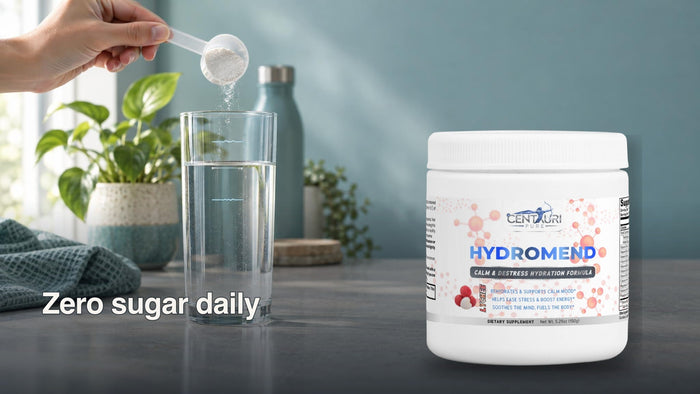
Direct answer: Yes, you can take electrolyte powder on an empty stomach. For most adults, a zero-sugar, stimulant-free formula like Centauri Pure Hydromend (1 scoop in 12-20 oz of water) is well-tolerated before eating. Electrolytes are minerals, not stimulants, so they do not spike cortisol or cause the nausea that caffeine-heavy pre-workouts can. A small number of people notice mild stomach sensitivity; mixing with a larger volume of water or eating a light snack first usually resolves it. Educational; not medical advice.
Key takeaways
- Electrolyte powders are mineral-based and generally safe to drink before meals for healthy adults.
- Zero-sugar, stimulant-free formulas like Hydromend carry the lowest risk of stomach upset when fasted.
- Mixing 1 scoop in at least 12-20 oz of water dilutes the mineral concentration and reduces sensitivity.
- People with acid reflux, kidney conditions, or who take certain medications should check with a clinician first.
- Morning is a practical time to start: overnight fluid loss means most people wake up mildly dehydrated.
Why People Worry About Taking Electrolytes Before Eating
The concern usually comes from experience with other supplements. Caffeine-heavy pre-workouts, iron tablets, and some vitamins are notorious for causing nausea on an empty stomach. Electrolyte powders work differently.
Electrolytes are dissolved minerals, primarily sodium, potassium, magnesium, and calcium, that your body uses to regulate fluid balance, nerve signals, and muscle contractions. They are not stimulants. They do not trigger an acid response the way caffeine or high-dose vitamin C can. That is why most people tolerate them before breakfast without any issue.
The main variable is formula quality. A powder loaded with sugar alcohols, artificial sweeteners at high doses, or added stimulants is more likely to cause GI discomfort when your stomach is empty. A clean, zero-sugar formula with moderate mineral doses sits in a different category.
Want the bigger picture? The Calm Hydration Guide puts this in the context of a full daily routine.
What the Research Says About Fasted Electrolyte Intake
There is no large clinical trial specifically on electrolyte powder timing relative to meals, but the underlying physiology is well-documented. Sodium and potassium absorption in the small intestine is active and does not require food to be present. Magnesium absorption can vary by form and dose, but at the modest amounts found in a single serving of a daily hydration powder, food co-ingestion is not required for uptake.
The National Institutes of Health notes that magnesium from supplements is absorbed across a range of conditions, and that GI side effects are more common at high doses (above 350 mg of supplemental magnesium per day) rather than at the 20 mg level found in a single Hydromend scoop.
Oral rehydration solutions, which are essentially electrolyte drinks, are routinely given to people who cannot eat, which further supports the idea that electrolytes do not require food to be useful or tolerated.
- Sodium: absorbed via active transport in the intestine, food not required
- Potassium: rapidly absorbed; high single doses on an empty stomach can cause nausea, but typical serving sizes (around 200 mg) are far below that threshold
- Magnesium: best absorbed at lower doses; 20 mg per scoop is a low-risk amount
- Calcium: absorption is slightly better with food, but 40 mg is a small amount and unlikely to cause issues fasted
Who Should Be More Careful
Most healthy adults will have no problem. A few groups should pay attention:
- People with acid reflux or GERD. Drinking anything on an empty stomach can trigger symptoms. Start with a larger volume of water (closer to 20 oz) and see how you feel.
- People with kidney disease. Impaired kidneys have trouble clearing excess potassium and sodium. Check with your clinician before adding any electrolyte supplement to your routine.
- People on potassium-sparing diuretics or ACE inhibitors. These medications can raise potassium levels. Adding a potassium-containing supplement without guidance is worth discussing with your prescriber.
- People who are sensitive to sweeteners. Some zero-sugar formulas use sugar alcohols like erythritol or sorbitol, which can cause bloating in sensitive individuals, while others use sucralose. Check the ingredient list for whichever formula you choose.
If you fall into one of these groups, the fix is usually simple: eat something small first, use more water, or time your electrolytes with a meal instead of before it.
How to Build a Morning Hydration Habit That Actually Sticks
Overnight, you lose fluid through breathing and light sweating without replacing it. By the time your alarm goes off, you are already mildly dehydrated. That is the practical case for morning electrolytes, fasted or not.
Here is a simple routine that works for busy adults:
- Fill a 16-20 oz glass or bottle with cold water as soon as you wake up. The act of filling it is the trigger.
- Add 1 scoop of Hydromend Calm Hydration. Stir or shake for 10 seconds. The zero-sugar formula dissolves cleanly and does not leave a syrupy aftertaste.
- Drink it before or alongside your first coffee. Hydromend is stimulant-free, so stacking it with coffee does not add more caffeine to your morning. It just means you are hydrated before the caffeine hits.
- Eat breakfast on your normal schedule. You do not need to delay or rush food around your electrolyte timing.
If you are intermittent fasting and want to keep your window clean, a zero-sugar electrolyte powder with no calories is generally considered compatible with a fasted state, though that is a personal and sometimes clinical decision depending on your protocol.
For a deeper look at daily hydration strategy, see the Calm Hydration Guide.
Hydromend Specifically: What Is in the Scoop
Not all electrolyte powders are the same, and the formula matters when you are drinking something before eating. Here is what one scoop (about 5.4 g) of Hydromend Calm Hydration contains:
- Sodium: approximately 100 mg
- Potassium: approximately 200 mg
- Magnesium: approximately 20 mg
- Calcium: approximately 40 mg
- B-vitamins: included for steady energy support framing, not as stimulants
- Sugar: zero
- Caffeine: zero
These are moderate, daily-use doses. They are not the aggressive sodium loads you see in endurance sport formulas, and they are not the high-potassium amounts that could cause GI distress in sensitive people. The B-vitamins support cellular energy metabolism without adding stimulant load, which is useful when you are trying to get through a morning meeting without a second espresso.
The zero-sugar positioning also matters here. Sugar-sweetened electrolyte drinks provide carbohydrates that some people prefer to avoid before breakfast, especially on low-carb or fasting days. A zero-sugar formula sidesteps that entirely.
Practical Answers to the Most Common Questions
The FAQ section below covers the specific scenarios people search for. If you want the full framework for daily hydration, the Calm Hydration Guide walks through timing, dose, and pairing strategies in one place.
Ready to try it? Hydromend Calm Hydration is built for exactly this use case: a clean, daily-use formula that works before breakfast, alongside coffee, or whenever you remember to drink water. It comes in four flavors.

Frequently asked questions
Can you take electrolytes on an empty stomach?
For most healthy adults, yes. Electrolytes are minerals, not stimulants, and they do not require food to be absorbed or tolerated. A zero-sugar, stimulant-free formula like Hydromend at 1 scoop in 12-20 oz of water is a low-risk choice before eating. People with kidney disease, acid reflux, or who take potassium-affecting medications should check with a clinician first.
Will electrolyte powder upset my stomach if I have not eaten?
It depends on the formula. High-dose sugar alcohols, large amounts of magnesium (above 350 mg supplemental), or added stimulants are the most common causes of GI discomfort when fasted. A moderate-dose, zero-sugar formula is much less likely to cause issues. If you are sensitive, use more water (closer to 20 oz) or have a small snack first.
Can I take electrolytes while intermittent fasting?
A zero-calorie, zero-sugar electrolyte powder is generally considered compatible with intermittent fasting because it does not provide calories or trigger a significant insulin response. Hydromend contains no sugar and about 10 calories per scoop, which makes it a practical option for people who want to stay hydrated during a fasting window. That said, fasting protocols vary, so check the rules of your specific approach.
Should I take electrolytes before or after breakfast?
Either works. The practical argument for before breakfast is that you wake up mildly dehydrated after several hours without fluids, so rehydrating first thing addresses an actual deficit. If your stomach is sensitive, taking electrolytes with or just after breakfast is equally effective for hydration. There is no meaningful absorption advantage to one timing over the other for a daily-use formula.
Can I mix electrolyte powder with my morning coffee instead of water?
Yes, and many people do. Hydromend is stimulant-free, so adding it to coffee does not stack more caffeine on top of what you are already drinking. Mixing with hot coffee can slightly affect flavor, so cold or room-temperature water is the cleaner option. If you want to keep them separate, drink your electrolytes first, then have coffee. Either way, you are not creating a safety issue.
How much water should I use when mixing electrolyte powder on an empty stomach?
Use at least 12 oz, and 16-20 oz is better if you are drinking it before eating. More water dilutes the mineral concentration, which reduces the chance of any stomach sensitivity. One scoop of Hydromend in 20 oz of cold water is the standard morning recommendation for people who are new to the product or who have a sensitive stomach.
Do electrolytes break a fast?
A zero-calorie, zero-sugar electrolyte powder does not contain macronutrients, so it does not break a fast in the caloric sense. Some strict fasting interpretations exclude anything other than water, so the answer depends on your personal or protocol-specific definition of fasting.
Is it bad to drink electrolytes first thing in the morning?
No. For most healthy adults, electrolytes first thing in the morning are a simple way to start the day hydrated. Mix at normal strength, sip over 10 to 20 minutes instead of chugging, and if your stomach feels off, have it with a small snack. With Hydromend that means 1 scoop in 12 to 20 oz of water.
Can you drink ORS or sports drinks like Electral or Pocari Sweat on an empty stomach?
Usually, yes. Oral rehydration salts and sports drinks are made to be absorbed with or without food. Sugary sports drinks can feel heavy on an empty stomach for some people, and ORS packets are built for replacing heavy losses, so follow the label. For a daily morning habit, a zero sugar electrolyte powder is the lighter option.
Sources & further reading
- Magnesium - Fact Sheet for Health Professionals (NIH Office of Dietary Supplements)
- Potassium - Fact Sheet for Health Professionals (NIH Office of Dietary Supplements)
- Oral Rehydration Salts: Production of the New ORS (WHO)
- Sodium and Potassium Intake and Mortality Among US Adults (JAMA Internal Medicine via PubMed)
Make it a daily habit. Hydromend Calm Hydration is one scoop of electrolytes and B-vitamins in 12-20 oz of water: zero sugar, caffeine-free, about $1.10 a scoop, and backed by a 90-day money-back guarantee. Want the full routine first? Read the Calm Hydration Guide.
Educational content only - not medical advice. Talk with a qualified clinician for personal health decisions.