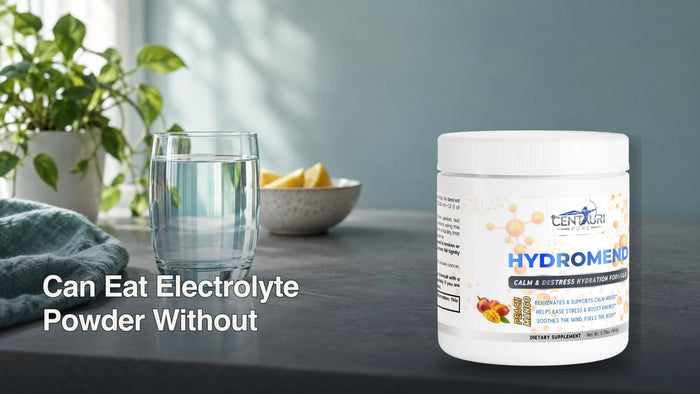
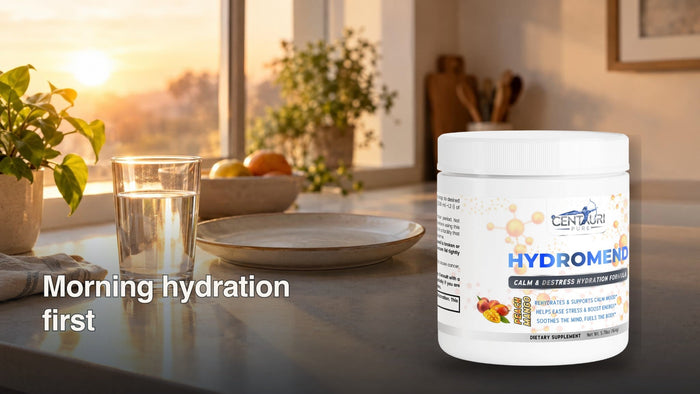
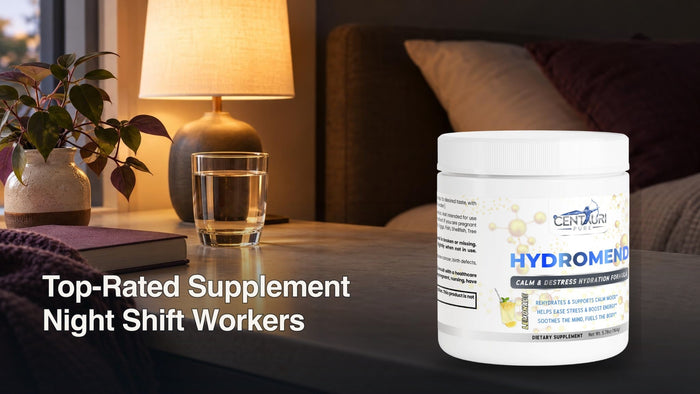
Direct answer: The leading zero sugar mineral powders share a few traits: no added sugar, a meaningful dose of sodium, potassium, and magnesium, and a sweetener that keeps calories near zero. What separates them is sodium level, flavor, and whether they add caffeine or other stimulants. Hydromend Calm Hydration by Centauri Pure is one option built specifically for a light, daily habit: zero sugar, caffeine-free, 100 mg sodium and 200 mg potassium per scoop, sweetened with sucralose, and about 10 calories. It is designed to make plain water easier to drink every day, not to replace a sports drink on a hard training day.
Key takeaways
- Zero sugar mineral powders skip added sugar but still use a sweetener, usually sucralose, stevia, or monk fruit. Check the label.
- Sodium levels vary widely across brands. A light daily drink sits around 100-200 mg per serving; a rehydration formula can exceed 500 mg.
- Caffeine-free means no stimulant load, which matters if you already drink coffee and want to stack hydration without stacking stimulants.
- Hydromend delivers 100 mg sodium, 200 mg potassium, 20 mg magnesium, and 40 mg calcium per scoop, all as citrates, plus a B-vitamin complex at 33% DV each.
- A zero sugar powder is not automatically better for hard sweat sessions. Match the product to the use case.
What Does Zero Sugar Actually Mean on a Mineral Powder Label?
Zero sugar means the product contains less than 0.5 g of added or naturally occurring sugar per serving, which the FDA rounds to zero on the nutrition facts panel. It does not mean unsweetened. Most zero sugar mineral powders use sucralose, stevia, or monk fruit to keep the drink palatable without the calorie load of glucose or fructose.
This matters for two reasons. First, if you are monitoring sugar intake for any reason, the sweetener type still affects taste and tolerance. Sucralose is heat-stable and has a clean sweet profile at low doses. Stevia can carry a bitter aftertaste at higher concentrations. Second, zero sugar does not automatically mean zero calories. Hydromend, for example, is zero sugar and about 10 calories per scoop, mostly from the mineral salts and B-vitamin carriers.
When you scan a label, look at three lines: total sugars, added sugars, and the ingredient list. If the ingredient list shows sucrose, dextrose, or cane sugar, the product is not truly zero sugar regardless of marketing language on the front of the pouch.
Want the bigger picture? The Calm Hydration Guide puts this in the context of a full daily routine.
How Do the Mineral Doses Compare Across Leading Options?
Sodium and potassium are the two minerals that move the most fluid across cell membranes, so their doses are the most important numbers to compare. Here is a rough breakdown of where common formats land:
- Light daily drinks (100-200 mg sodium): Designed for people who are generally well-hydrated and want to make water more interesting or support a consistent intake habit. Hydromend sits here at 100 mg sodium and 200 mg potassium per scoop.
- Mid-range sports formulas (200-400 mg sodium): Better suited to moderate workouts or warm-weather activity where sweat loss is real but not extreme.
- High-sodium rehydration formulas (500 mg+ sodium): Designed for heavy sweat sessions, illness recovery, or clinical-adjacent use. Regular Liquid I.V., for example, contains about 500 mg sodium and about 11 g sugar per stick. It is a different tool for a different job.
Magnesium and calcium are secondary but still relevant. Hydromend provides 20 mg magnesium and 40 mg calcium per scoop, both as citrates, which are well-tolerated forms. These doses are modest, not therapeutic, and that is intentional for a daily-use product.
If you want a calm, low-sodium daily drink that makes water easy to finish, Hydromend Calm Hydration is built for that use case. If you are coming off a two-hour run in July heat, a higher-sodium formula or an oral rehydration solution is the more appropriate tool.
Caffeine-Free vs. Stimulant-Loaded: Why It Matters for a Daily Habit
A growing number of mineral powders add caffeine, B12 megadoses, or adaptogens to the formula. That can work for a pre-workout context, but it creates a problem for daily use: you end up stacking stimulants on top of coffee, tea, or whatever else you already drink in the morning.
Caffeine-free means the product adds no stimulant load. You can mix it into your morning water bottle alongside your regular coffee and not think twice about it. You can also use it in the afternoon without affecting sleep patterns. For people who already manage their caffeine intake carefully, this is not a small detail.
Hydromend is stimulant-free and caffeine-free. The energy-support framing on the label refers to the B-vitamin complex, specifically B1, B2, B3, B5, B6, folate, and B12 (as methylcobalamin), each at 33% of the daily value. B-vitamins support normal energy metabolism at the cellular level. They do not produce a stimulant effect or a buzz. That distinction matters if you are comparing it to a product that lists caffeine as an active ingredient.
Honest Objections: Sucralose, Cost, and Whether You Actually Need This
On sucralose: Hydromend is sweetened with sucralose. It is not naturally sweetened, and we do not claim otherwise. Sucralose is FDA-approved, widely used, and stable in water. Some people prefer stevia or monk fruit. If you are in that camp, Hydromend may not be your first choice, and that is a fair call.
On cost: At $29.97 per jar with about 30 scoops, that works out to roughly $1 per scoop. Plain water costs less. If your current habit is drinking enough water consistently, you may not need a mineral powder at all. Where Hydromend earns its place is for people who find plain water boring and end up under-drinking, or who want a light mineral top-up on days they sweat a little more than usual. The 90-day money-back guarantee means you can test that assumption without much risk.
On whether you need it: Most adults who eat a varied diet and drink adequate water are not mineral-deficient. A zero sugar mineral powder is not a medical intervention. It is a tool for making water more appealing and adding a light mineral contribution to your day. If that sounds useful, it probably is. If it does not, skip it.
How to Use a Zero Sugar Mineral Powder as a Daily Habit
The simplest approach: one scoop in 14-20 oz of water, once a day, at whatever time you are most likely to actually drink it. Morning works well because it pairs with coffee without adding more caffeine. Afternoon works if that is when your water intake tends to drop off.
Hydromend comes in four flavors: Lychee (the flagship), Lemonade, Passion Fruit, and Peach Mango. Flavor preference is personal, but having one you actually enjoy is the most reliable way to build a consistent habit.
The label limit is no more than 5 scoops in 24 hours. For most people, one scoop per day is the right starting point. On days with more physical activity or heat exposure, a second scoop is reasonable. On days with heavy sweat loss, consider whether a higher-sodium product is the better fit for that specific situation.
For a fuller look at building a calm hydration routine, the Calm Hydration Guide covers timing, pairing with coffee, and what to expect in the first week.
What to Look for When Comparing Zero Sugar Mineral Powders
If you are evaluating several options, here is a short checklist that cuts through the label noise:
- Sodium dose: Is it appropriate for your use case? Light daily use or heavy sweat replacement are different needs.
- Sweetener: Sucralose, stevia, or monk fruit? Check the ingredient list, not the front panel.
- Caffeine: Is it listed as an ingredient? Some mineral powders add it; some do not.
- Artificial dyes: Some brands use synthetic colorants. Hydromend uses a fruit and vegetable blend for color, no artificial dyes.
- Calorie count: Zero sugar does not always mean zero calories. Know what you are getting.
- Price per serving: Divide the jar price by the number of scoops. Marketing packaging can obscure this.
- Return policy: A money-back guarantee is a signal that the brand stands behind the product.
No single product is the right answer for every person. The goal is matching the formula to your actual daily routine, not to a marketing claim about what the leading option is supposed to do.

Frequently asked questions
Are zero sugar mineral powders actually sugar-free?
Yes, if the label shows 0 g total sugars and the ingredient list contains no sucrose, dextrose, fructose, or cane sugar. They are sweetened with non-caloric sweeteners like sucralose, stevia, or monk fruit instead. Hydromend uses sucralose and contains zero sugar per scoop.
What minerals should a daily zero sugar electrolyte powder include?
At minimum, sodium and potassium, since these two minerals are most directly involved in fluid balance. Magnesium and calcium are useful additions. Hydromend provides 100 mg sodium, 200 mg potassium, 20 mg magnesium, and 40 mg calcium per scoop, all as citrates.
Is a zero sugar mineral powder a good replacement for a sports drink?
It depends on the intensity and duration of the activity. A light daily mineral powder like Hydromend, with 100 mg sodium per scoop, is designed for everyday hydration support, not for replacing fluids and electrolytes lost during long or intense exercise. For heavy sweat sessions, a higher-sodium formula or oral rehydration solution is a better fit.
Can I use a zero sugar mineral powder every day?
Yes, that is the intended use case for products like Hydromend. One scoop in 14-20 oz of water once a day is a straightforward daily habit. The label limit for Hydromend is no more than 5 scoops in 24 hours. Daily use is safe for healthy adults; if you have a medical condition affecting kidney function or fluid balance, check with your doctor.
Does a zero sugar mineral powder have caffeine?
Not always. Some mineral powders add caffeine or other stimulants; others are caffeine-free. Hydromend is stimulant-free and caffeine-free. The B-vitamin complex in the formula supports normal energy metabolism but does not produce a stimulant effect.
How does Hydromend compare to regular Liquid I.V. on sugar and sodium?
Regular Liquid I.V. contains about 500 mg sodium and about 11 g sugar per stick. Hydromend contains 100 mg sodium and zero sugar per scoop. They are built for different purposes. Liquid I.V. is a higher-sodium rehydration formula; Hydromend is a light, daily-habit drink for people who want mineral support without sugar or a heavy sodium load.
Sources & further reading
- Dietary Reference Intakes for Water, Potassium, Sodium, Chloride, and Sulfate - National Academies
- Electrolytes - StatPearls, NCBI Bookshelf
- B Vitamins and the Brain: Mechanisms, Dose and Efficacy - Nutrients, NCBI
- Sucralose - Examine.com
If a calm, zero sugar daily hydration habit sounds like the right fit, Hydromend Calm Hydration is worth trying. One scoop in your morning or afternoon water bottle, zero sugar, no caffeine, and about $1 per scoop. Orders over $40 ship free, and every jar is backed by a 90-day money-back guarantee.
Educational content only - not medical advice. Talk with a qualified clinician for personal health decisions.